
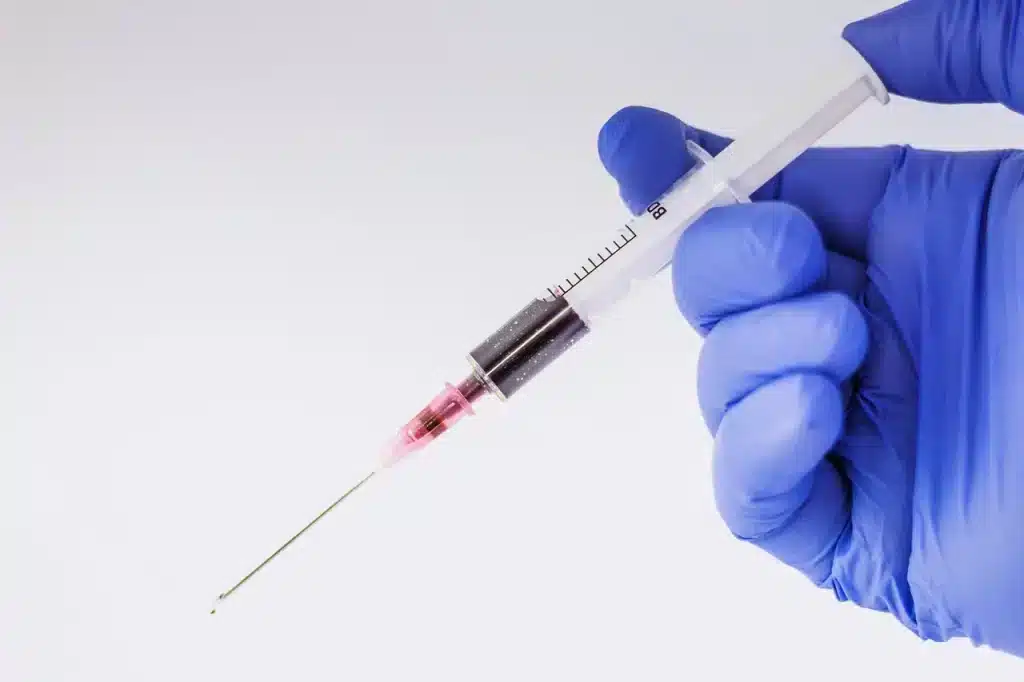
Phlebotomy, the professional field concerned with collecting blood from patients, is one of the most popular entry-level medical careers. Phlebotomists play an integral role in medicine by collecting samples, keeping accurate records and ensuring that the samples are properly delivered to laboratories. People in this field can go on to more advanced jobs in medicine or remain in their roles as phlebotomists over the course of their careers. Thanks to the high number of blood samples that are required for modern medical tests and the need for skilled professionals to collect blood donations, phlebotomy is also a stable job field with high prospects for future growth.
Becoming a phlebotomist requires a postsecondary certification earned by taking a series of courses and passing a certifying exam. Unlike more demanding introductory medical programs, phlebotomy programs don’t require a college background or entail a 2-year degree. Because there are no prerequisites other than a high school diploma or GED, phlebotomy is accessible to practically anyone looking to begin a career in medicine.
One of the best ways to become a phlebotomist is to enroll in an online training program. These programs offer similar training to in-person instruction, flexible scheduling and a cost that is within almost any student’s reach. Here’s your guide to the best online phlebotomy programs and what you should know about becoming a phlebotomist in 2023.
Contents
What Is an Online Phlebotomy Program?
Online phlebotomy programs prepare learners to work in the medical field by properly collecting and processing blood samples from patients. Phlebotomists learn to operate a wide range of modern blood collection instruments as well as techniques for collecting blood from patients with special medical requirements. The elderly and infants, for example, may require more specialized collection techniques or care after blood is collected. People suffering from certain chronic diseases may also require specialized care for blood to be drawn safely. Students in phlebotomy programs will be introduced to such special cases and instructed in how to handle them in practice.
These programs also teach basic laboratory procedures, record keeping, medical regulation compliance and a host of other skills that are essential to working in the medical field. As with most medical programs, students will learn communication skills to help them interact effectively with patients in a clinical setting. As a result, taking an online phlebotomy program is a good introduction to both the hard and soft skills required for a successful career in medicine.
Upon successful completion of the program and an accrediting exam, students earn certificates that allow them to work as phlebotomists. While there are a handful of states that have specific certification requirements, students can work in most states after passing their national certification exams. To remain current, phlebotomists must renew their certifications each year.
Breaking into the medical field as a phlebotomist can lead to a variety of different career paths. Phlebotomists frequently go onto careers as nurses, technologists or medical assistants. Phlebotomy can, however, also be a good starting point for more advanced medical careers. Some phlebotomists even choose to attend medical school and become doctors. While many career paths are available to those who complete a phlebotomy program, additional classes, certifications or degrees are required to move into more advanced jobs.
Why Choose an Online Phlebotomy Program?
One major advantage to pursuing an online phlebotomy program is that it is one of the easiest ways to break into the medical field. To enter one of these programs, students only need to have their high school diplomas or GEDs. It should also be noted that phlebotomy programs offer post secondary certificates, rather than full degrees. As a result, becoming a working phlebotomist takes much less time than getting a job that requires a 2- or 4-year degree.
Students choose phlebotomy programs as a relatively fast, affordable way to increase their earnings and begin working in healthcare. For younger students who aren’t actively in college, becoming a phlebotomist is often a good early career option. Even for college students, though, a phlebotomy program offers some value. Pre-med students, for example, can get vital clinical experience by working part-time as phlebotomists while continuing their studies. Likewise, students in nursing programs may choose phlebotomy as a way to establish a professional history and begin working with potential future employers.
Those best suited to a career in phlebotomy will have a combination of personal skills and an interest in science. Empathy and communication are key to successful patient interactions, and technical skills are required for sample collection and processing. Thanks to the widespread fear of having blood drawn, an ability to calm people and display relaxing confidence is quite helpful. If you have a combination of these skill sets, phlebotomy may be a good fit for you.
Although most phlebotomy training is quite affordable, there is still an advantage to taking online programs. Taking phlebotomy courses online offers substantial cost savings, and the classes can be taken on a flexible schedule. Because the certificates for phlebotomists are valid on a nationwide basis, there’s also little advantage to location-specific training.
Types of Online Phlebotomy Schools
When you’re considering getting into a phlebotomy program one of the first things you’ll want to do is look for the right education to meet your needs. Getting a good start on your future career is very important, and it’s much easier to do when you have the knowledge you’re looking for. To do that, there are two main types of phlebotomy schools online for you to choose from.
Online Phlebotomy Diploma Program
A diploma program is one option when you’re looking for phlebotomy schools online. This program is the longest of the two options, because getting a diploma is much like getting a degree. It takes longer than getting a certificate. Despite this, there’s still a wide range of options when it comes to your diploma program. Some take only a few months, while others could take a year or longer.
Online Phlebotomy Certification Programs
Certification programs are available at many phlebotomy schools online. These programs can take a few weeks or months, or you can choose one that’s self-paced, so you can complete it on a timeline that works for you. Some 48-hour courses are also available for phlebotomy, but these are generally for people who have some additional training or medical knowledge already. Exploring your options for certification programs can help you choose the one that’s best for your needs.
How long Is Online Phlebotomy School?
Online phlebotomy school typically takes between eight weeks and one year, depending on which program you’re choosing and where you’re getting your education. While that’s a large range to consider, you want to look at more than just the length of time getting your education will take.
Also look into the reputation of the school where you’re getting your degree, and consider the differences in what you’ll learn. Sometimes taking longer to complete your education can be a better choice, but that’s not always the case.
How to Become a Phlebotomist
Becoming a phlebotomist isn’t that difficult, but you’ll need to follow the right steps to do so. Keep in mind that these are general steps that are the basis of working as a phlebotomist, and your state may have some different steps or specific information. Always be sure you’re following the guidelines for your state of residence, so you can get through the requirements and start on your career. Generally,to be a phlebotomist you’ll need to:
- Have a high school education or earn your GED
- Apply and get accepted to an accredited program for phlebotomy
- Successfully complete the phlebotomy program you’ve chosen
- Earn your certificate from that program
- Take an exam to become certified in phlebotomy for your state
There are also phlebotomy organizations that you may be able to join, and some of them require you to have at least six months of experience on the job first. Belonging to organizations can help you network, gain experience and information, and stand out from your peers for promotion or other career considerations.
Phlebotomy Education Requirements
Education requirements for phlebotomists are typically not as stressful as the requirements for many other healthcare careers. That doesn’t mean that phlebotomists are any less skilled, trained, or important. They’re a vital part of the medical field. But when you work as a phlebotomist you’re trained to do one specific kind of task, and that can mean faster training to be career-ready.
You’ll need to have a high school education, and pass the accredited course you take for your phlebotomy career. That course can be as short as eight weeks in some cases, or could take a year. A self-paced course might be a good choice if you want to get through it as quickly as possible, or if you’re not sure how much time you’ll have to complete it around other obligations.
Can You Take Phlebotomy Classes Online?
You can absolutely take some (or most) of your phlebotomy classes online. That can make it easier for you to study during times that are convenient for you, such as nights or weekends. If you’re already working, or you have a lot of other obligations, taking your phlebotomy classes online means you can learn about your new career when you’re able to, so you can work your training into your day, around your current schedule.
Because phlebotomy is a hands-on job that requires specific skills, though, every phlebotomy school has a clinical component that has to be completed in person. There are some techniques and pieces of information you really can’t learn to do without physical practice, so you’ll need to be prepared to complete that part of the coursework. Many phlebotomy schools online partner with in-person schools and clinical practices to help students complete that aspect of their education.
What to Expect from a Phlebotomy School
Understanding what to expect from a phlebotomy school online or in person can help you be more prepared before you begin your educational journey. You can expect to learn about disease prevention, cleanliness, donor safety, anatomy, and the circulatory system. You may also learn about office-based procedures and regulations in the medical field, such as HIPAA. Naturally, an eight-week course is going to be different from a longer course, but both can provide quality information and education.
Coursework
The coursework you’ll experience at phlebotomy schools online can vary based on the program, but you can generally expect to learn about:
- First aid and CPR (some require CPR certification before acceptance)
- Medical terminology
- Anatomy, with a focus on the arteries and veins
- Diseases and disease processes
- HIPAA and legal regulations
- Laboratory practices
- Venipuncture and blood processing
It’s very important to learn about all different aspects of your new career, so you can be prepared to get started when your education is complete. Phlebotomists are important, and provide a valuable service for doctors, hospitals, and clinics. If you want to work as a phlebotomist, and you have a high school diploma or GED, getting started on the coursework is the first step.
How Much Does a Phlebotomy Program Cost?
Phlebotomy programs are among the most affordable postsecondary educational programs. Some of the best online phlebotomy programs available charge as little as $300. Similar programs at community colleges and technical schools can cost $700 to $1,400, which still makes phlebotomy one of the most economically accessible careers that requires certification.
Although the programs themselves are quite affordable, there are other expenses associated with phlebotomy training that can raise the price somewhat. Hands-on training kits, textbooks, exam fees and other incidental expenses can add up to increase the total cost of phlebotomy training by up to a few hundred dollars. Even with these add-ons, an online phlebotomy program will cost less than most other forms of vocational training.
Aspiring phlebotomists should also be aware of the ongoing costs of maintaining their certificates. Recertification requires a certain number of continuing education credits. While continuing education courses are usually quite affordable, they do add to the cost of maintaining an active certification. Generally, you can expect to pay $50-75 per continuing education course. In many cases, you’ll be able to get an employer to reimburse you for continuing education classes. You can also take advantage of these classes to build up your knowledge base for future advancement into other medical jobs.
How Much Do Phlebotomists Make?
According to the Bureau of Labor Statistics, the median pay for phlebotomists in 2020 was around $36,300 per year as of May 2020. This equates to an hourly rate of $17.46 per hour. Payscale notes a slightly lower median hourly wage of $15.57, or about $32,400 per year. It should be noted that the Payscale data is more recent, coming from July 2021. Some compensation for phlebotomists, however, comes from outside the normal wage structure. According to Payscale, phlebotomists can receive up to $2,000 from bonuses and a similar amount from profit sharing each year.
Payscale also offers more complete data on the pay of phlebotomists as they gain experience on the job. Starting out, phlebotomists earn a median wage of $13.54. With 5–9 years of experience under their belts, this wage increases to $16.08. The most experienced phlebotomists earn $18.36 an hour, or about $38,200 a year. Because phlebotomy is usually a starting point for people interested in medical careers, though, relatively few phlebotomists maximize their pay through experience before deciding to advance their education and move up into more lucrative positions.
When considering how much phlebotomists are paid, it’s also important to take benefits into account. As professionals within the medical industry, many phlebotomists receive health and dental insurance at discounted rates through their companies. Company retirement plans are also a common part of the non-wage compensation for phlebotomists. For those who are using phlebotomy as an entry point for other medical careers, educational savings are also a possibility. Many healthcare companies offer tuition reimbursement for workers willing to sign extended contracts. Together, these benefits can add up to thousands of dollars in non-wage compensation each year.
What Is the Job Outlook for Phlebotomy Certificate Holders?
Those holding phlebotomy certificates can find work in blood donation centers, hospitals, doctor’s offices and medical labs. There are also ample travel opportunities for phlebotomists, both domestically and abroad. The work of a traveling phlebotomist can involve visiting medical facilities in rural areas to collect samples or servicing non-hospital facilities without on-site phlebotomists, such as nursing homes. On the international front, jobs exist with international relief organizations, charitable foundations and multinational healthcare companies.
Over the next 10 years, the projected job growth for phlebotomists is 17 percent. This makes phlebotomy a faster-than-average growth field. By the end of the decade, an expected 22,800 jobs in this field will have been created.
Scholarships for Phlebotomy Programs
Because phlebotomy certificate programs aren’t traditional degree programs, there are fewer scholarship opportunities for students who enroll in them. There are, however, still some options available if you’re trying to save money on becoming a certified phlebotomist.
When looking for financial assistance for one of these programs, it’s important to keep in mind that there are many sources of aid that aren’t specific to phlebotomy. General medical scholarships and even general assistance programs can also be used to pay for your training. Here are some of the scholarships and grants you should look into when enrolling in an online phlebotomy program.
American Society for Clinical Pathology Lab Student Scholarship
A scholarship of $500 is available to students in accredited phlebotomy programs. This is one of the few phlebotomy-specific options.
School Scholarships
Many technical schools and community colleges offer institutional scholarships or grants. If you qualify, you can use the money for a phlebotomy program.
Pell Grants
If you’re obtaining a phlebotomy certification while also pursuing a larger degree program, you may be able to use federal Pell grants to pay for it.
State Vocational Grants
In certain states, you may be able to pay for your phlebotomy certification with a state vocational grant. These grants do not require repayment.
FAQs About Phlebotomy Certifications
Summary
- Programs available online, through technical schools and at community colleges
- Programs can be completed in as little as 4 months
- Certificates earned from online programs are valid in almost all states
- Online programs work well for flexible schedules
- Some programs offer more than one skill set, i.e., combined phlebotomy and EKG technician training
- Online phlebotomy programs are an inexpensive path for entering the medical field.
- Programs can be completed much faster than college degree programs.
- Phlebotomy can lead to more advanced medical careers with continued education
- Better-than-average job growth projections indicate good career stability.
- Non-wage benefits such as insurance and retirement plans are common for phlebotomists.
- Travel potential and widespread job opportunities make phlebotomy a good option for students looking for mobility.
- Program costs vary but rarely exceed $1,500.
- Programs can cost as little as $300.
- Textbook and additional material costs are fairly manageable.
- Even the best online phlebotomy programs cost around $700.
- Some grants and scholarships available.