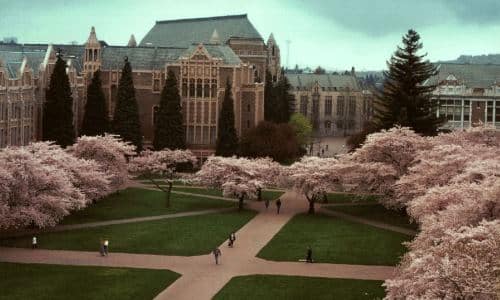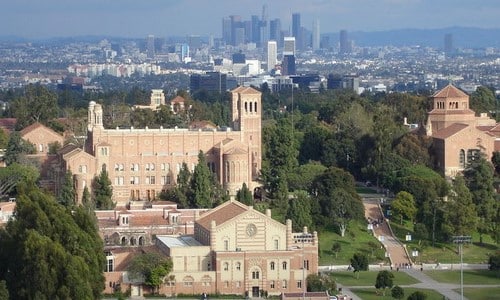
The University of Pittsburgh at Greensburg (UPG) is a baccalaureate degree-granting unit and regional campus of the University of Pittsburgh. As an integral part of a state-related institution, the Greensburg Campus provides educational opportunities to both traditional and nontraditional students through curricular and co-curricular experiences that are focused primarily on the arts and sciences and some selected professional or pre-professional programs that are grounded in traditional liberal arts disciplines. As an undergraduate school within the broader University, UPG�s faculty places primary emphasis on teaching excellence while maintaining a commitment to scholarship and public service.
A common part of the undergraduate educational experience is acquiring a certain depth and breadth of knowledge in a specific discipline or area that defines a student�s major focus of study. Equally important is the opportunity for each student to acquire the fundamentals of a liberal arts and sciences education. The University of Pittsburgh at Greensburg is committed to a General Education Program that will give its students a broader understanding of the human experience and the fundamental skills necessary for academic success and learning throughout their lifetimes.
UPG recognizes that good citizenship, civic leadership, and full participation in an information-based, global society are a function of educational excellence. Accordingly, in all curricular and co-curricular matters, including its unique academic village structure, the Greensburg Campus fulfills its mission by providing its students with opportunities to develop leadership, a sense of civic engagement and public service, global awareness, and a commitment to academic excellence.
University of Pittsburgh at Greensburg is a branch campus of the University of Pittsburgh which opened in 1963 and was granted degree-granting status in 1988. In 1999 Pitt-Greensburg opened the first of three academic villages (Behavioral Sciences, Natural Sciences, and Humanities) for high-achieving students.
Four presidents have led the campus since its founding: Al Smith (1963-1980), George Chambers (1980-1996), Norm Scanlon (interim president, 1996-1997), and Frank Cassell (1997-2007).
In March of 2007, Sharon Smith was named UPG's fifth president. Her tenure began on July 1, 2007.
As of 2005, Pitt-Greensburg had 1600 full-time undergraduates and 76 full-time faculty.
The University of Pittsburgh at Greensburg (UPG) is located in Greensburg, Pennsylvania, a city located in Westmoreland County, and approximately 33 miles to the southeast of Pittsburgh. Since 1976, the university has been situated on the former estate of Charles McKenna Lynch.
The entire campus covers 219 acres. Student residences consist of "Houses" in the Academic Village section (Apollo, Athena, Benjamin Franklin, Margaret Mead, Selene, and Thurgood Marshall), with Village Hall as the Villages' social hub. Residence Halls are also located in College Hall and Robertshaw Hall, and the University Courts. Other campus facilities include three classroom buildings (Powers, Smith, and McKenna -- which also serves as the computer center), Millstein Library, Chambers Hall, the administration building (Lynch Hall), and the Ridilla Athletic Fields. The campus also features a nature trail and a small creek (Slate Creek) that runs through the center of campus.
Pitt-Greensburg offers approximately 20 bachelor's degree programs. The University of Pittsburgh, including UPG and its other regional campuses, is fully accredited through the Middle States Association of Colleges and Schools’ Commission on Higher Education.
Pitt-Greensburg competes athletically as a member of NCAA Division III and is a charter member of the Allegheny Mountain Collegiate Conference. Men's athletic programs include basketball, soccer, baseball, tennis, golf, and cross country. Women's programs consist of basketball, soccer, softball, volleyball, golf, cross country. UPG also has an intramural program with flag football, racquetball, and billiards.
|
Full-Time vs. Part-Time
|
Men vs. Women
|
||||
|
Race/Ethnicity
|
|
In State vs. Out-of-State
|
Top States for Incoming Freshman
|
| Percent of Students International: | 0% |
| On-Campus Housing Available: | Yes |
| Percent of Students Living On-Campus: | 35% |
| Freshman Students Required to Live on Campus: | No |
| Member of: | NAA, NCAA |
| Sports Include: |
Basketball (Allegheny Mountain Collegiate Conference) Baseball (Allegheny Mountain Collegiate Conference) Track (Allegheny Mountain Collegiate Conference) |
| Tuition & Fees (undergraduate) | In-State | Out-of-State | |
Published Tuition and Fees: |
$ 10,562 | $ 20,450 | |
Average Tuition for Full-Time Undergrads: |
$ 9,888 | $ 19,776 | |
Required Fees for Full-Time Undergrads: |
$ 674 | $ 674 | |
| Financial Aid | Avg. Amount Received | % of Students Receiving Aid | |
Federal Grants: |
$ 2,809 | 27% | |
State and Local Grants: |
$ 2,257 | 50% | |
Institutional Grants: |
$ 1,721 | 14% | |
Student Loans: |
$ 3,875 | 65% | |
Any Aid: |
81% |
| Acceptance Rate: | 69% (Selective) |
| Test Scores | |
| SAT Scores: | |
| % of Students Submitting SAT Scores: | 100% |
| Bottom 25th Percentile: | Verbal: 480, Math: 490 |
| Top 75th Percentile: | Verbal: 570, Math: 580 |
| Application Fee: | $ 35.00 |
| Formal Demonstration of Competencies: | Not Required |
| High School Diploma or Equivalent: | Required |
| High School GPA: | Required |
| High School Rank: | Recommended |
| High School Record: | Required |
| Recommendations: | Not Required |
| TOEFL: | Required |
| Test Scores: | Required |