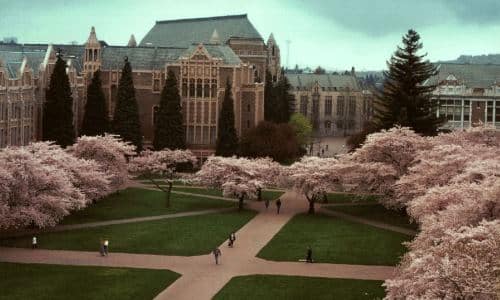
School Description
Provided by Life UniversityWith its vitalistic vision, clearly defined performance proficiencies and measurable criteria for success, a Life University education will produce leaders who exemplify humanistic values and, in a world where change is constant, provide innovative approaches to direct that change to elevate society and evolve its health care system.
The mission of Life University is to educate its students in a set of core life proficiencies, equipping them to become skilled professionals, and preparing them for successful careers focused on serving the health needs of society. To fulfill this mission, the University, an institution based on contemporary vitalistic principles, offers high quality, integrative programs in chiropractic, biology, nutrition, sports health science, general studies and business.
Founded in 1974, Life University has a long history of being recognized nationally for its innovative chiropractic program and commitment to providing a high-quality undergraduate and graduate education at an affordable price.
Life University has the distinction of being Georgia’s only highly selective chiropractic college and boasts superior programs in the fields of biology, biopsychology, business administration, computer information management, dietetics, life coaching, nutrition, psychology, and sport health science.
We hold particular philosophies "about education and human performance " that create an uncommon university experience. Because ours is not a "plain vanilla" approach, we want you to understand who we are so you can decide if your goals and the Life experience are a good fit. If they are, you're in for an exciting and life-stretching couple of years.
Life University faculty, students and staff share a strong respect for the wonders of the human body. Our vitalistic philosophy recognizes the inborn healing abilities of the body and the inner wisdom that regulates it in a state of health. Interestingly, this philosophy doesn't show up only in our health care majors. It manifests itself throughout the curriculum and even in our administrative decisions. In fact, our commitment to true health is actually what prompted us to become one of the first 100 universities in the nation to join the American College & University Presidents Climate Commitment to address global warming.
Atlanta pulses. A little edgy — sometimes a little cocky — this young and dynamic city is serious about work and fun. With more than four million residents from many ethnic and racial backgrounds excited about everything from organic cooking to NASCAR, the nation’s third-largest city has a place for you that will feel just right.
Sure, Atlanta’s weather is to die for with super-long spring and fall seasons, easy-to-take winters and actually pretty reasonable summers (its elevation gives Atlanta a more temperate climate than areas farther south) but Atlanta is really about what you can do, see, hear, feel, watch and experience here.
Life University
From Wikipedia, The Free EncyclopediaLife University is located in Marietta, Georgia. It specializes in degrees in Chiropractic, and also offers programs in Dietetics Psychology, Life Coaching, Business, Exercise Science, Nutrition, Sport Health Sciences and Biology.
Education programs
Life University is divided into three distinct colleges: The College of Chiropractic (D.C. Doctor of Chiropractic), The College of Graduate Studies (M.S. Sports Health Science), and The College of Undergraduate Studies (Certificate Life Coaching, A.S. Computer Information Management and Life Coaching, B.S. Biology, Biopsychology, Business Administration, Computer Information Managment, Dietetics, Exercise Science, General Studies and Nutrition).
Pre-requisites for entering the DC (Doctor of Chiropractic) program in the College of Chiropractic includes 6 semester or 9 quarter hours of English Language Skills, 3 semester or 4.5 quarter hours of psychology, 15 semester or 22.5 quarter hours of additional Humanities or Social Sciences, 6 semester or 9 quarter hours of biological sciences, 12 semester or 18 quarter hours of chemistry, and 6 semester or 9 quarter hours of physics with unduplicated content (of which one must include a pertinent related laboratory that covers the range of material presented in the didactic portions of the course) or 3 semester or 4.5 quarter hours in physics (with laboratory) and 3 semester or 4.5 quarter hours in either biomechanics, kinesiology, statistics or exercise physiology. A bachelor's degree is not necessary for entering the DC program however, 90 semester / 135 quarter hours of pre-requisite undergraduate courses as specified by the CCE are required. Life University offers a curriculum for pre-chiropractic that is not a degree program but may lead to an undergraduate degree.
The DC program is 14 quarters long, which is three and a half years.
History
Life University was founded in 1974 by Dr. Sid Williams as Life Chiropractic College. The university was established on the site of a placer gold mine. 22 students attended the first classes in January 1975. They became known as "Day one class". By 1990, the school had grown to become the largest college of chiropractic in the world. Appointed in March 2004, the university's current president is Dr. Guy Riekeman, D.C., former Chancellor of the Palmer Chiropractic University System. In 2006, Life University remains the largest school in the chiropractic profession.
Quick Facts
- Location:
- Southeast
- Setting:
- Large Town Setting
- Type:
- Private
- Size:
- Small (Under 2,000 Undergrad)
Students & Campus Life
- Undergraduate Enrollment:
- 410
- On Campus Housing:
- Available
- Full Time Students:
- 96%
- Athletic Programs:
- Unavailable
Degree Programs at Life University
Associate's Level Programs
-
Business
-
Information Systems
See more schools with programs in
Information Systems
-
Management Information Systems
A program that generally prepares individuals to provide and manage data systems and related facilities for processing and retrieving internal business information; select systems and train personnel; and respond to external data requests. Includes instruction in cost and accounting information systems, management control systems, personnel information systems, data storage and security, business systems networking, report preparation, computer facilities and equipment operation and maintenance, operator supervision and training, and management information systems policy and planning.See more schools with programs in Management Information Systems
-
Management Information Systems
-
Information Systems
See more schools with programs in
Information Systems
-
Interdisciplinary Studies
-
Nutrition Sciences
A scientific program that focuses on the utilization of food for human growth and metabolism, in both normal and dysfunctional states, from the interdisciplinary perspective of the agricultural, human, biological, and biomedical sciences. Includes instruction in food science, biochemistry, physiology, dietetics, food and nutrition studies, biotechnology, biophysics, and the clinical sciences.See more schools with programs in Nutrition Sciences
-
Nutrition Sciences
Bachelor's Level Programs
-
Business
-
Information Systems
See more schools with programs in
Information Systems
-
Management Information Systems
A program that generally prepares individuals to provide and manage data systems and related facilities for processing and retrieving internal business information; select systems and train personnel; and respond to external data requests. Includes instruction in cost and accounting information systems, management control systems, personnel information systems, data storage and security, business systems networking, report preparation, computer facilities and equipment operation and maintenance, operator supervision and training, and management information systems policy and planning.See more schools with programs in Management Information Systems
-
Management Information Systems
-
Management
See more schools with programs in
Management
-
Business/Commerce
This program provides a general study of business, including the processes of interchanging goods and services (buying, selling and producing), business organization, and accounting as used in profit-making and nonprofit public and private institutions and agencies. The programs may prepare individuals to apply business principles and techniques in various occupational settings.See more schools with programs in Business/Commerce
-
Business/Commerce
-
Information Systems
See more schools with programs in
Information Systems
-
Health & Medical Services
-
Dietetics and Clinical Nutrition Services
See more schools with programs in
Dietetics and Clinical Nutrition Services
-
Dietetics/Dietitian (RD)
A program that prepares individuals to integrate and apply the principles of the food and nutrition sciences, human behavior, and the biomedical sciences to design and manage effective nutrition programs in a variety of settings. Includes instruction in human nutrition; nutrient metabolism; the role of foods and nutrition in health promotion and disease prevention; planning and directing food service activities; diet and nutrition analysis and planning; supervision of food storage and preparation; client education; and professional standards and regulations.See more schools with programs in Dietetics/Dietitian (RD)
-
Dietetics/Dietitian (RD)
-
Healthcare Administration
See more schools with programs in
Healthcare Administration
-
Health/Health Care Administration/Management
A program that prepares individuals to develop, plan, and manage health care operations and services within health care facilities and across health care systems. Includes instruction in planning, business management, financial management, public relations, human resources management, health care systems operation and management, health care resource allocation and policy making, health law and regulations, and applications to specific types of health care services.See more schools with programs in Health/Health Care Administration/Management
-
Health/Health Care Administration/Management
-
Dietetics and Clinical Nutrition Services
See more schools with programs in
Dietetics and Clinical Nutrition Services
-
Interdisciplinary Studies
-
Nutrition Sciences
A scientific program that focuses on the utilization of food for human growth and metabolism, in both normal and dysfunctional states, from the interdisciplinary perspective of the agricultural, human, biological, and biomedical sciences. Includes instruction in food science, biochemistry, physiology, dietetics, food and nutrition studies, biotechnology, biophysics, and the clinical sciences.See more schools with programs in Nutrition Sciences
-
Nutrition Sciences
-
Life Science
-
Biology
See more schools with programs in
Biology
-
Anatomy
The study of Anatomy is the scientific study of organ systems, tissue structures, and whole bodies together with their cellular and structural components and dynamics. Anatomy programs include instruction in cell biology and histology, structural biology, molecular mechanics, regional and gross anatomy, embryology, neuroanatomy, endocrinology and secretory dynamics, and applications to such topics as aging and disease conditions.See more schools with programs in Anatomy
-
Biology/Biological Sciences
Students in this program study general biology at an introductory level. This major provides students with a broad overview of biology and includes instruction in general biology and programs covering a variety of biological specializations.See more schools with programs in Biology/Biological Sciences
-
Anatomy
-
Biology
See more schools with programs in
Biology
Master's Level Programs
-
Fitness, Recreation and Leisure Studies
-
Physical Fitness
See more schools with programs in
Physical Fitness
-
Kinesiology and Exercise Science
A scientific program that focuses on the anatomy, physiology, biochemistry, and biophysics of human movement, and applications to exercise and therapeutic rehabilitation. Includes instruction in biomechanics, motor behavior, motor development and coordination, motor neurophysiology, performance research, rehabilitative therapies, the development of diagnostic and rehabilitative methods and equipment, and related analytical methods and procedures in applied exercise and therapeutic rehabilitation .See more schools with programs in Kinesiology and Exercise Science
-
Kinesiology and Exercise Science
-
Physical Fitness
See more schools with programs in
Physical Fitness
-
Health & Medical Services
-
Diagnostic & Treatment Technician
See more schools with programs in
Diagnostic & Treatment Technician
-
Athletic Training/Trainer
Athletic Training program can be two or four years in length. Individuals in these programs work under the supervision of physicians to prevent and treat sports injuries. This major program includes topics in the identification, evaluation, and treatment of athletic injuries and illnesses; first aid and emergency care; therapeutic exercise; anatomy and physiology; exercise physiology; kinesiology and biomechanics; nutrition; sports psychology; personal and community health; knowledge of various sports and their biomechanical and physiological demands; and applicable professional standards and regulations.See more schools with programs in Athletic Training/Trainer
-
Athletic Training/Trainer
-
Diagnostic & Treatment Technician
See more schools with programs in
Diagnostic & Treatment Technician
Students
General
|
Full-Time vs. Part-Time
|
Men vs. Women
|
||||
|
Race/Ethnicity
|
Geography
|
In State vs. Out-of-State
|
Top States for Incoming Freshman
|
| Percent of Students International: | 11% |
Housing
| On-Campus Housing Available: | Yes |
| Percent of Students Living On-Campus: | 21% |
| Freshman Students Required to Live on Campus: | No |
| Tuition & Fees (undergraduate) | Expenses | ||
Published Tuition and Fees: |
$ 5,733 | ||
Average Tuition for Full-Time Undergrads: |
$ 5,328 | ||
Required Fees for Full-Time Undergrads: |
$ 315 | ||
| Financial Aid | Avg. Amount Received | % of Students Receiving Aid | |
Federal Grants: |
$ 2,385 | 45% | |
State and Local Grants: |
$ 1,941 | 39% | |
Student Loans: |
$ 6,291 | 65% | |
Any Aid: |
65% |
Selectivity (Undergraduate Only)
| Acceptance Rate: | 38% (Highly Selective) |
| Test Scores | |
| SAT Scores: | |
| % of Students Submitting SAT Scores: | 39% |
| Bottom 25th Percentile: | Verbal: 480, Math: 450 |
| Top 75th Percentile: | Verbal: 520, Math: 520 |
| ACT Scores: | |
| % of Students Submitting ACT Scores: | 12% |
| Bottom 25th Percentile: | Composite: 19, Verbal: 16, Math: 17 |
| Top 75th Percentile: | Composite: 20, Verbal: 22, Math: 20 |
Application Requirements (Undergraduate Only)
| Application Fee: | $ 50.00 |
| Formal Demonstration of Competencies: | Not Required |
| High School Diploma or Equivalent: | Not Required |
| High School GPA: | Required |
| High School Rank: | Not Required |
| High School Record: | Required |
| Recommendations: | Not Required |
| TOEFL: | Required |
| Test Scores: | Required |