Founded in Worcester, Mass., in 1865, WPI was one of the nation's earliest technological universities. From our founding days, we've taken a unique approach to science and technology education.
Where science and technology meet real-world problems
We believe that students should understand how to apply knowledge – not just how to cite facts and theories. Our undergraduates and graduate students emerge ready to take on some of the most difficult challenges in science and technology. More important, they understand how their work can truly impact society and improve our lives.
Outstanding academics, faculty and research programs
WPI's 18 academic departments offer more than 50 undergraduate and graduate degree programs in science, engineering, technology, management, the social sciences, and the humanities and arts, leading to the BS, MS, ME, MBA and PhD. Our world-class faculty work with students in a number of cutting-edge research areas, leading to breakthroughs and innovations in such fields as biotechnology, fuel cells, nanotechnology, and information security. Students also have the opportunity to make a difference to communities and organizations around the world through our innovative Global Perspectives program. There are over 20 WPI project centers throughout North America and Central America, Africa, Australia, Asia, and Europe.
A highly regarded institution
WPI is ranked No. 62 among all national, doctoral universities by U.S. News & World Report; No. 1 for student/faculty interaction in the National Survey of Student Engagement; and No. 9 by The Princeton Review for "best career prospects" for graduates of our MBA program. And that's just the beginning of the recognition we've received from a large number of institutions and individuals for our high quality and unique approach to education.
A community of diverse interests
The WPI community is alive with activity. Students participate in nearly 200 extracurricular activities, including music, theatre, and Greek organizations, 20 varsity sports teams, and more than 30 club and intramural sports. There are also fun campus-wide annual events, including Homecoming, Winter Ball, and QuadFest.
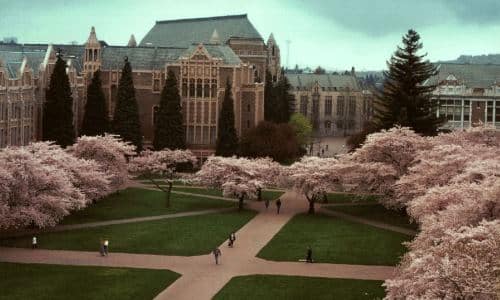
A beautiful campus in a central location
WPI's 80-acre traditional, New England campus is set on a secluded hilltop in an area that is home to 13 colleges (and over 35,000 college students). Worcester is an exciting place to be, with several museums, music and theatre performance centers, an arena for concerts and sporting events, and lots of restaurants, entertainment venues, and shopping centers. Commuter rail service offers students easy access to all that Boston has to offer—and it's just an hour away.
Worcester Polytechnic Institute (WPI) is a private university located in Worcester, Massachusetts, in the United States.
Worcester Polytechnic Institute was founded in 1865 as the Worcester County Free Institute of Industrial Science by John Boynton and Ichabod Washburn, two prominent Worcester industrialists. Stephen Salisbury II, Emory Washburn, George Frisbee Hoar, Phillip Moen, Seth Sweetser, David Whitcomb, and Charles O. Thompson were also instrumental in the founding of the school. The collaboration between Boynton, who wanted to teach science, and Washburn, who wanted to teach vocational skills, led to the university's philosophy of "theory and practice." Funding and land grants for the university were given by Stephen Salisbury II, who was an influential merchant and later served as the first president of the Institute's board of directors. Though Boynton died before the first class entered in 1868, and Washburn died shortly afterwards, their contributions to WPI in its infancy are memorialized by Boynton Hall and Washburn Shops, the first two buildings on the campus.
WPI was led in its early years by president and professor of chemistry Charles O. Thompson. Early graduates of WPI went on to become mechanical and civil engineers, as well as artisans, bankers, and enter other prominent occupations. WPI continuously expanded its campus and programs throughout the early twentieth century, eventually including graduate studies and a program in electrical engineering. During World War II, WPI offered defense engineering courses and was selected as one of the colleges to direct the V-12 Navy College Training Program.
During this time, WPI suffered from the lack of a unified library system, well-maintained buildings, and national recognition. This changed under the leadership of president Harry P. Storke from 1962 to 1969. Storke brought significant change to the school in what would be known as the WPI Plan. The Plan called for the creation of three projects and drastically redesigned the curriculum to address how a student learns. The Storke administration also launched a capital campaign that resulted in the creation of the George C. Gordon Library, added residence halls, an auditorium, and a modern chemistry building. Furthermore, women were first allowed to enter WPI in February of 1968. The WPI Plan is the guiding principle behind undergraduate education at the Institute today, and is arguably the most notable contribution WPI has made towards science and engineering education.
|
Full-Time vs. Part-Time
|
Men vs. Women
|
||||
|
Race/Ethnicity
|
|
In State vs. Out-of-State
|
Top States for Incoming Freshman
|
| Percent of Students International: | 10% |
| On-Campus Housing Available: | Yes |
| Percent of Students Living On-Campus: | 35% |
| Freshman Students Required to Live on Campus: | No |
| Member of: | NAA, NCAA |
| Sports Include: |
Football (Freedom Football Conference) Basketball (New England Women's & Men's Athletic Conference) Baseball (New England Women's & Men's Athletic Conference) Track (New England Women's & Men's Athletic Conference) |
| Tuition & Fees (undergraduate) | Expenses | ||
Published Tuition and Fees: |
$ 31,190 | ||
Average Tuition for Full-Time Undergrads: |
$ 30,990 | ||
Required Fees for Full-Time Undergrads: |
$ 200 | ||
| Financial Aid | Avg. Amount Received | % of Students Receiving Aid | |
Federal Grants: |
$ 5,380 | 14% | |
State and Local Grants: |
$ 3,825 | 44% | |
Institutional Grants: |
$ 15,541 | 84% | |
Student Loans: |
$ 6,952 | 74% | |
Any Aid: |
89% |
| Acceptance Rate: | 85% (Selective) |
| Test Scores | |
| SAT Scores: | |
| % of Students Submitting SAT Scores: | 97% |
| Bottom 25th Percentile: | Verbal: 560, Math: 620 |
| Top 75th Percentile: | Verbal: 670, Math: 710 |
| ACT Scores: | |
| % of Students Submitting ACT Scores: | 28% |
| Bottom 25th Percentile: | Composite: 24, Verbal: 24, Math: 24 |
| Top 75th Percentile: | Composite: 29, Verbal: 29, Math: 29 |
| Application Fee: | $ 60.00 |
| Formal Demonstration of Competencies: | Not Required |
| High School Diploma or Equivalent: | Required |
| High School GPA: | Not Required |
| High School Rank: | Not Required |
| High School Record: | Required |
| Recommendations: | Required |
| TOEFL: | Required |
| Test Scores: | Required |