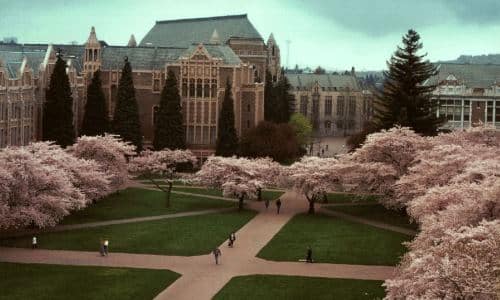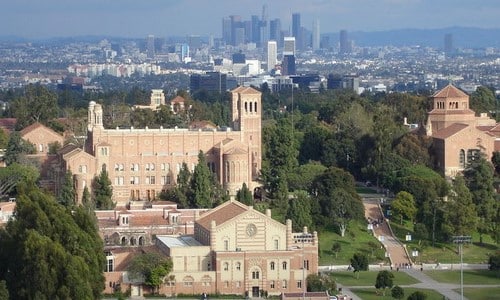
Emphasizing teaching, student advising, and student involvement in the life of the college and the community, Westfield State College's primary mission is to assist its students to develop intellectually and to use their knowledge and skills to improve the social and economic conditions in their communities. The college seeks to instill among members of its community a sense of social responsibility and citizenship.
The college emphasizes the importance of collaborative education, distinguished and strengthened by a general education program which links the arts and sciences with professional studies and by opportunities for experiential and community-based learning. General education courses are developed to respond to stated knowledge and skill objectives and students examine significant academic and social issues through upper-level integrative courses and courses stressing national and global diversity. Community-based learning and other capstone experiences provide significant opportunities to enrich students' understanding of academic principles and concepts, illuminate differences between theory and practice, inculcate habits of mind and work conducive to success, and instill respect for others. Westfield's residential program, the largest of the state college segment, complements the academic program.
The college, from its beginnings, prepared students to serve their communities as teachers, and teacher education remains a central part of the college's programs and a model for engagement with the community that characterizes many of the college's other academic programs as well. Strong professional involvement of its faculty within their disciplines and community support scholarship and learning. Building upon a strong base of graduate programs, Westfield State College intends to strengthen and expand its graduate offerings. The college occupies a leadership position in offering post-baccalaureate and professional development programs for educators and will utilize new technologies to improve upon and expand our delivery of these programs. Collaborative relationships with other colleges and universities will also make possible the efficient development of new programs in other areas marked by strong undergraduate programs. The nationally recognized Criminal Justice Program stands as an example of the college's service, collaboration and outreach to communities, other colleges and state agencies. Technology will continue to be an important priority in the college's future, enhancing the educational experience and creating new opportunities for collaboration with other colleges and universities as well as with local school systems and businesses.
Each of the state system's institutions place a special emphasis on teaching, lifelong learning, and a campus life that fosters intellectual, social and ethical development. The state colleges are committed to excellence in instruction, affordable costs, and to providing responsive, innovative and educational programs of high quality. This is accomplished by developing each student's critical thinking skills, oral and written communication, and a practical appreciation of the arts, sciences, and humanities as they affect good citizenship and an improved quality of life.
The state colleges offer a campus climate that respects the ideas, values, perspectives and contributions of a culturally diverse community. They provide both academic and personal support services to assure that all students have a realistic opportunity to achieve academic and career success. They serve as a leader and resource for the community, identifying opportunities and solutions to community problems, and contributing to the region's cultural, environmental, and economic development.
The state colleges support the public system through their commitment to joint admissions programs, by managing their resources in an efficient and responsible manner, by maintaining high admission standards and career replacement rates, by preventing unnecessary duplication of academic programs, by expanding collaborative efforts with K-12 and other baccalaureate institutions, by providing high quality teacher education programs, and by developing for each college, beyond its core programs, a distinctive academic focus based upon established strengths and regional and state needs.
Westfield State College at 577 Western Avenue, in Westfield, Massachusetts, USA, is a small liberal arts college, located about 20 minutes from Springfield, Massachusetts and about 2 hours from Boston.
WSC was founded in 1838 in Barre, Massachusetts as a normal school. WSC was the first coeducational normal school in the United States. Since the 1970's, the school has expanded its program to include criminal justice, mass communications, regional planning, political science, urban development, business planning, and other programs. The school's mascot is the owl and its colors blue and white. The college is most recognized for its Criminal Justice Program and more State Troopers have graduated from WSC than from any other school.
|
Full-Time vs. Part-Time
|
Men vs. Women
|
||||
|
Race/Ethnicity
|
|
In State vs. Out-of-State
|
Top States for Incoming Freshman
|
| Percent of Students International: | 0% |
| On-Campus Housing Available: | Yes |
| Percent of Students Living On-Campus: | 55% |
| Freshman Students Required to Live on Campus: | No |
| Member of: | NAA, NCAA |
| Sports Include: |
Football (New England Football Conference) Basketball (Massachusetts State College Ath Assoc) Baseball (Massachusetts State College Ath Assoc) Track (Massachusetts State College Ath Assoc) |
| Tuition & Fees (undergraduate) | In-State | Out-of-State | |
Published Tuition and Fees: |
$ 5,657 | $ 12,707 | |
Average Tuition for Full-Time Undergrads: |
$ 970 | $ 7,050 | |
Required Fees for Full-Time Undergrads: |
$ 4,687 | $ 4,687 | |
| Financial Aid | Avg. Amount Received | % of Students Receiving Aid | |
Federal Grants: |
$ 3,017 | 19% | |
State and Local Grants: |
$ 3,820 | 31% | |
Institutional Grants: |
$ 1,884 | 26% | |
Student Loans: |
$ 2,568 | 65% | |
Any Aid: |
71% |
| Acceptance Rate: | 74% (Selective) |
| Test Scores | |
| SAT Scores: | |
| % of Students Submitting SAT Scores: | 89% |
| Bottom 25th Percentile: | Verbal: 470, Math: 470 |
| Top 75th Percentile: | Verbal: 550, Math: 560 |
| Application Fee: | $ 25.00 |
| Formal Demonstration of Competencies: | Not Required |
| High School Diploma or Equivalent: | Required |
| High School GPA: | Required |
| High School Rank: | Not Required |
| High School Record: | Required |
| Recommendations: | Not Required |
| TOEFL: | Required |
| Test Scores: | Required |