When Grinnell College framed its charter in the Iowa Territory of the United States in 1846, it set forth a mission to educate its students "for the different professions and for the honorable discharge of the duties of life." The College pursues that mission by educating young men and women in the liberal arts through free inquiry and the open exchange of ideas. As a teaching and learning community, the College holds that knowledge is a good to be pursued both for its own sake and for the intellectual, moral, and physical well-being of individuals and of society at large. The College exists to provide a lively academic community of students and teachers of high scholarly qualifications from diverse social and cultural circumstances. The College aims to graduate women and men who can think clearly, who can speak and write persuasively and even eloquently, who can evaluate critically both their own and others' ideas, who can acquire new knowledge, and who are prepared in life and work to use their knowledge and their abilities to serve the common good.
Grinnell is a powerhouse on the national scene. Ever progressive, it was the first college west of the Mississippi to admit African Americans and women, and the first in the country to establish an undergraduate department of political science. It was once a stop on the Underground Railroad, and its graduates include Harry Hopkins, architect of the New Deal, and Robert Noyce, inventor of the integrated circuit, two people who did as much as anyone to change the face of American society in the 20th century.
We offer individually advised curriculum; only a handful of colleges in the country give you the freedom to design your own academic program. Each student is responsible for making the most of what the College offers.
We have:
* About 1,600 students
* Most classes have fewer than 20 students
* 13 percent international, 26 percent U.S. students of color
* More than half of students study off campus during academic career
* 26 majors, 11 concentrations
* Over 500 course offerings every semester
* 9:1 student/faculty ratio
* 96 percent of faculty lives near campus
* 52 percent of students complete at least one independent study course
* More than 70 study abroad programs around the world
* 3,000 internship opportunities in the United States and abroad
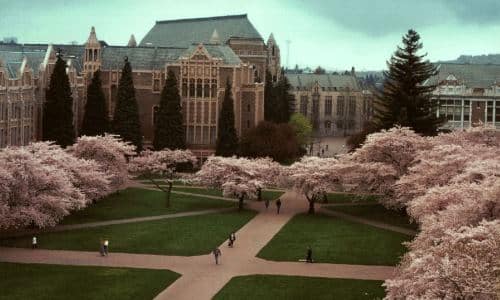
Grinnell College has an attractive 120-acre campus of spectacular academic facilities that include the Noyce Science Center, featured in architectural journals; and the Bucksbaum Center for the Arts, designed by Cesar Pelli. The College also owns the 365-acre Conard Environmental Research Area (CERA), located about 14 miles from the campus and used on a regular basis for research and teaching.
The city of Grinnell is a community rooted in agriculture, but also benefits from a long history of international commercial connections and civic pride, leadership, and accomplishment. Grinnell's buildings are rich in architectural interest. Thirteen sites in town are listed on the National Register of Historic Places, including the Louis Sullivan "Jewel Box" bank building and the Walter Burley Griffin "Ricker" house. The city of Grinnell offers members of the campus community a chance to enjoy the quality of life that has earned it a place among the 25 "Best Small Towns in America" in the book of that title.
Outdoor recreational activities include lakes, prairie preserves, cross country ski trails, and a paved bicycle path connecting Grinnell and Rock Creek State Park. In town, attractions include a downtown triplex cinema, eclectic downtown shopping, coffee shops, bed-and-breakfast inns, weekend antique auctions, restaurants, and diverse city parks.
Grinnell College is a private liberal arts college in Grinnell, Iowa, U.S. with a strong tradition of social activism. It was founded in 1846, when a group of pioneer New England Congregationalists established the Trustees of Iowa College.
Grinnell is classified as a more selective institution by the Carnegie Foundation and is ranked fourteenth among liberal arts colleges by U.S. News and World Report. In 2004 it received the "Best All-Around" college rating from Newsweek magazine.
Until recently, the estimated value of Grinnell's endowment was the highest among liberal arts colleges; it had the third-largest endowment among them.
[[File:Blair-hall-grinnell-college.jpg|thumb|right|200px|Blair Hall: Constructed between 1882-1886 and razed in 1961.]] In 1843 eleven Congregational ministers, all of whom trained at Andover Theological Seminary in Massachusetts, set out to proselytize on the frontier. Each man pledged to gather a church and together the group or band would seek to establish a college. When the group arrived in Iowa later that year, each selected a different town in which to establish a congregation. In 1846 they collectively established Iowa College in Davenport. A few months later, Iowa joined the Union.
The first 25 years of Grinnell's history saw a change in name and location. Iowa College moved farther west from Davenport, Iowa, to the town of Grinnell and unofficially adopted the name of its new benefactor: an abolitionist minister, Josiah Bushnell Grinnell, to whom journalist Horace Greeley famously wrote "Go West, young man, go West, and grow up with the country!" The name of the corporation "The Trustees of Iowa College" remained, but in 1909 the name "Grinnell College" was adopted by the trustees for the institution itself.
In its early years, the College experienced setbacks. Although two students received bachelor of arts degrees in 1854 (the first to be granted by a college west of the Mississippi River), within 10 years the Civil War had claimed most of Grinnell's students and professors. In the decade following the war, growth resumed: women were officially admitted as candidates for degrees, and the curriculum was enlarged to include then-new areas of academic studies, such as natural sciences with laboratory work.
Learn more about Bachelor’s Degree Programs
A general program that focuses on the English language, including its history, structure and related communications skills; and the literature and culture of English-speaking peoples. See more English Language and Literature Schools or Online English Language and Literature School Degree Programs
A program that focuses on the general study of dramatic works and their performance. Includes instruction in major works of dramatic literature, dramatic styles and types, and the principles of organizing and producing full live or filmed productions. See more Drama and Dramatics/Theatre Arts Schools or Online Drama and Dramatics/Theatre Arts School Degree Programs
Students in this major study the Chinese language and its associated dialects and literature, including Chinese philology, Archaic and Classical Chinese, Modern Standard Chinese (Guóyu), Mandarin, Cantonese, Taiwanese, Wu, Min, Hunanese, Hakka, other dialects and pidgins, and applications to business, science/technology, and other settings. See more Chinese Language and Literature Schools
This general program focuses on the literary culture of the ancient Graeco-Roman world and the Greek and Latin languages and literatures and their development prior to the fall of the Roman Empire. See more Classics and Languages, Literatures and Linguistics Schools
A program that focuses on the French language and related dialects and creoles. Includes instruction in French philology, Metropolitan French, Canadian French, African and Caribbean Creoles, French regional dialects, and applications in business, science/technology, and other settings. See more French Language and Literature Schools
A program that focuses on the German language and related dialects as used in Austria, Germany, Switzerland, neighboring European countries containing German-speaking minorities, and elsewhere. Includes instruction in German philology; Old, Middle, and High German; Plattdeutsch and other regional dialects; and applications to business, science/technology, and other settings. See more German Language and Literature Schools
A program that focuses on the Russian language. Includes instruction in Russian philology, Old Russian, Modern Russian and dialects, literature, and applications to business, science/technology, and other settings. See more Russian Language and Literature Schools
A program that focuses on the Spanish language and related dialects. Includes instruction in Spanish philology, Modern Castillan, various Latin American dialects, regional Spanish dialects, and applications in business, science/technology, and other settings. See more Spanish Language and Literature Schools
A program that focuses on the general study and interpretation of the past, including the gathering, recording, synthesizing and criticizing of evidence and theories about past events. Includes instruction in historiography; historical research methods; studies of specific periods, issues and cultures; and applications to areas such as historic preservation, public policy, and records administration. See more History Schools or Online History School Degree Programs
A general program that focuses on the introductory study and appreciation of music and the performing arts. Includes instruction in music, dance, and other performing arts media. See more General Music Schools or Online General Music School Degree Programs
A program that focuses on ideas and their logical structure, including arguments and investigations about abstract and real phenomena. Includes instruction in logic, ethics, aesthetics, epistemology, metaphysics, symbolism, and history of philosophy, and applications to the theoretical foundations and methods of other disciplines. See more General Philosophy Schools or Online General Philosophy School Degree Programs
A program that focuses on the nature of religious belief and specific religious and quasi-religious systems. Includes instruction in phenomenology; the sociology, psychology, philosophy, anthropology, literature and art of religion; mythology; scriptural and textual studies; religious history and politics; and specific studies of particular faith communities and their behavior. See more General Religion/Religious Studies Schools or Online General Religion/Religious Studies School Degree Programs
Art and Art Studies is a general, introductory program that focuses on the study and appreciation of the visual arts. Students of these two or four year programs receive instruction in art, photography, and other visual communications media. See more Art/Art Studies Schools or Online Art/Art Studies School Degree Programs
Any instructional program that is derived from two or more distinct programs to provide a cross-cutting focus on a subject concentration that is not subsumed under a single discipline or occupational field. See more Multi-/Interdisciplinary Studies Schools or Online Multi-/Interdisciplinary Studies School Degree Programs
Study the chemistry of living systems in these four, six, or eight year programs. Students of biochemistry learn the intricacies of the chemistry of living systems and their chemical pathways and information transfer systems. This program includes instruction in bio-organic chemistry, protein chemistry, bioanalytical chemistry, bioseparations, regulatory biochemistry, enzymology, hormonal chemistry, calorimetry, and research methods and equipment operation. See more Biochemistry Schools
Students in this program study general biology at an introductory level. This major provides students with a broad overview of biology and includes instruction in general biology and programs covering a variety of biological specializations. See more Biology/Biological Sciences Schools or Online Biology/Biological Sciences School Degree Programs
A general program that focuses on the analysis of quantities, magnitudes, forms, and their relationships, using symbolic logic and language. Includes instruction in algebra, calculus, functional analysis, geometry, number theory, logic, topology and other mathematical specializations. See more General Mathematics Schools or Online General Mathematics School Degree Programs
A general program that focuses on the scientific study of the composition and behavior of matter, including its micro- and macro-structure, the processes of chemical change, and the theoretical description and laboratory simulation of these phenomena. See more General Chemistry Schools or Online General Chemistry School Degree Programs
A general program that focuses on the scientific study of matter and energy, and the formulation and testing of the laws governing the behavior of the matter-energy continuum. Includes instruction in classical and modern physics, electricity and magnetism, thermodynamics, mechanics, wave properties, nuclear processes, relativity and quantum theory, quantitative methods, and laboratory methods. See more General Physics Schools
A program that focuses on the systematic study of human beings, their antecedents and related primates, and their cultural behavior and institutions, in comparative perspective. Includes instruction in biological/physical anthropology, primatology, human paleontology and prehistoric archeology, hominid evolution, anthropological linguistics, ethnography, ethnology, ethnohistory, socio-cultural anthropology, psychological anthropology, research methods, and applications to areas such as medicine, forensic pathology, museum studies, and international affairs. See more General Anthropology Schools or Online General Anthropology School Degree Programs
A general program that focuses on the systematic study of the production, conservation and allocation of resources in conditions of scarcity, together with the organizational frameworks related to these processes. Includes instruction in economic theory, micro- and macroeconomics, comparative economic systems, money and banking systems, international economics, quantitative analytical methods, and applications to specific industries and public policy issues. See more General Economics Schools or Online General Economics School Degree Programs
A general program that focuses on the systematic study of political institutions and behavior. Includes instruction in political philosophy, political theory, comparative government and politics, political parties and interest groups, public opinion, political research methods, studies of the government and politics of specific countries, and studies 0f specific political institutions and processes. See more General Political Science and Government Schools or Online General Political Science and Government School Degree Programs
A general program that focuses on the scientific study of individual and collective behavior, the physical and environmental bases of behavior, and the analysis and treatment of behavior problems and disorders. Includes instruction in the principles of the various subfields of psychology, research methods, and psychological assessment and testing methods. See more General Psychology Schools or Online General Psychology School Degree Programs
A program that focuses on the systematic study of human social institutions and social relationships. Includes instruction in social theory, sociological research methods, social organization and structure, social stratification and hierarchies, dynamics of social change, family structures, social deviance and control, and applications to the study of specific social groups, social institutions, and social problems. See more Sociology Schools or Online Sociology School Degree Programs
A general program that focuses on computers, computing problems and solutions, and the design of computer systems and user interfaces from a scientific perspective. Includes instruction in the principles of computational science, and computing theory; computer hardware design; computer development and programming; and applications to a variety of end-use situations. See more General Computer Science Schools or Online General Computer Science School Degree Programs
|
Full-Time vs. Part-Time
|
Men vs. Women
|
||||
|
Race/Ethnicity
|
|
In State vs. Out-of-State
|
Top States for Incoming Freshman
|
| Percent of Students International: | 10% |
| On-Campus Housing Available: | Yes |
| Percent of Students Living On-Campus: | 80% |
| Freshman Students Required to Live on Campus: | No |
| Member of: | NAA, NCAA |
| Sports Include: |
Football (Midwest Conference) Basketball (Midwest Conference) Baseball (Midwest Conference) Track (Midwest Conference) |
| Tuition & Fees (undergraduate) | Expenses | ||
Average Tuition for Full-Time Undergrads: |
$ 27,060 | ||
Required Fees for Full-Time Undergrads: |
$ 444 | ||
| Financial Aid | Avg. Amount Received | % of Students Receiving Aid | |
Federal Grants: |
$ 3,596 | 14% | |
State and Local Grants: |
$ 2,953 | 39% | |
Institutional Grants: |
$ 13,925 | 90% | |
Student Loans: |
$ 4,651 | 52% | |
Any Aid: |
93% |
| Acceptance Rate: | 51% (Highly Selective) |
| Test Scores | |
| SAT Scores: | |
| % of Students Submitting SAT Scores: | 60% |
| Bottom 25th Percentile: | Verbal: 640, Math: 650 |
| Top 75th Percentile: | Verbal: 760, Math: 730 |
| ACT Scores: | |
| % of Students Submitting ACT Scores: | 39% |
| Bottom 25th Percentile: | Composite: 28, Verbal: 27, Math: 27 |
| Top 75th Percentile: | Composite: 32, Verbal: 34, Math: 32 |
| Application Fee: | $ 30.00 |
| Formal Demonstration of Competencies: | Not Required |
| High School Diploma or Equivalent: | Recommended |
| High School GPA: | Required |
| High School Rank: | Required |
| High School Record: | Required |
| Recommendations: | Required |
| TOEFL: | Required |
| Test Scores: | Required |
College Advice on Grinnell College |
Question: Does anyone know anything about Grinnell College?I have been looking into colleges to apply to next year, and Grinnell seems like a good place for me. Do you know anything about the college? What is there to do in Grinnell? How selective are their admissions? Is there good financial aid? What are the nearest large cities? Any information would be great.13 months ago
Best AnswerNo Limits! Most things to do in Grinnell are on-campus and free. Speakers, films (often semi-new releases), concerts (GZA came last year), weekly dance parties, lots of clubs, a campus coffee shop and pub, and lots of interesting students who make up their own fun. All-campus parties are big, such as Mary B. James (crossdressing...get it?) and Disco. Classes are great, overall...the ones I haven't liked were more due to material than teaching. It's a great collection of engaged people, and you get some interesting discussions as a result. Roughly 35% get admitted, and that will be tightening this year because of overenrollment last year. Financial aid varies with the person, but is usually very good. Work hard and get forms in on time. Des Moines and Iowa City are each about an hour away and have funky/sexy/cool parts, but Grinnell's a nice town in and of itself. There are two coffee shops, good restaurants, and some neat consignment shops and a really convenient grocery store. If you're coming in from out of state and need to fly, they run shuttles to and from DSM over breaks. |
Question: Has anyone heard of Grinnell, Iowa and Grinnell College?Grinnell College is one of the best liberal arts colleges (and most expensive) in the country. It's in my hometown, been here since before the Civil War. Just curious.28 months ago
Best AnswerYes, I've heard of it. It sort of belongs to a mid-continental "ivy league" of private 4-yr colleges with high standards and smart students. Our little secret! |
Question: Grinnell college (Iown)?my brother is really interested in going there next year and i was just wondering if any of you have visited there before or go there or have older sibblings who go there? what's it like? ive heard its kinda in the boonies! but i love their basketball program! sorry i mean Iowa32 months ago
Best AnswerGrinnell College is mostly for prospective students who like small college towns that are pretty much secluded from the rest of the world. At Grinnell College, the student body is so small that teachers know most students by name and hold their hands on occasions. I hope this helps. |
Question: which university should I choose?I'm an international student who intends to study English.. I have six choices to choose three from them. The options are: Colorado college, college of saint scholastica, lawrence university, university of missouri, Lynn university and grinnell.40 months ago
Best AnswerI think all of these are respectable schools, but probably the one with the best academic reputation is Grinnell. However, I am not sure that Grinnell would be the best choice for a foreign student. The school is good, and I think the students there would be friendly, but it is quite small and it is located in a small town in a VERY remote, rural area. If I was a foreign student coming to the USA, I would like to be somewhere a little more central, a little easier to get around and visit some of the rest of the USA. You need to study a map and check out where the schools are and what kind of place they are in, and how large the student population is, how many other foreign students are there. Any one of these schools can teach you what you need for an English degree, but the type of place the school is in, and what the school is like, could make a big difference in how happy you are there! |