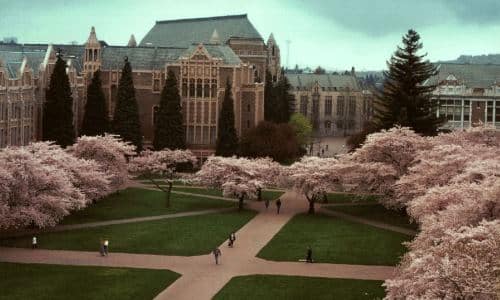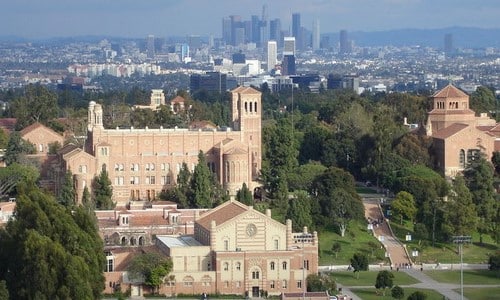
Drew University's highest priority is excellence in liberal education in a changing world environment. This priority guides the planning, implementing, and evaluating of the programs and activities of the University as well as the stewardship of its varied resources.
Excellence in liberal education at Drew requires scholarly, creative faculty who teach effectively and intellectually prepared students who want to learn. This excellence emphasizes the interrelatedness of learning in undergraduate, graduate and theological schools and promotes intellectual rigor and responsible citizenship, while preparing individuals for significant contributions to society.
Drew University endeavors to create a distinctive environment for liberal education. Characteristics of this environment are an ethos of curiosity and achievement within an intentionally intimate community of learning which emphasizes close student-faculty relationships and collegiality. This ethos includes respect for individuality and appreciation of diversity. Drew University places special attention on the ongoing evaluation and improvement of teaching and learning, the uses of technology, and the global context of knowledge.
Drew University is a private university located in Madison, New Jersey.
Originally established as the Drew Theological Seminary in 1867, the university later expanded to include an undergraduate liberal arts college in 1928 and commenced a program of graduate studies in 1955. Nicknamed the "University in the Forest" because of the relative serenity of its wooded 186 acres (753,000 m²) relative to the school's suburban surroundings, Drew University maintains a combined undergraduate and graduate enrollment of approximately 2,500 students, with the majority living on-campus.
While Drew is affiliated with the United Methodist Church, it makes no religious demands on its students. Many of the Theological School's students and faculty are United Methodist, and the History and Archives Commission of the United Methodist Church is housed on campus.
In 1867, Daniel Drew (1797-1879), a financier and railroad tycoon, endowed his antebellum estate in Madison for the purpose of establishing the Drew Theological Seminary. To this day, the Theological Seminary continues to graduate candidates for service in the ministry; however, the institution grew to include a liberal arts curriculum.
Dr. James Strong first published his seminal work, Strong's Concordance, in 1890, during his tenure as Professor of exegetical theology at Drew Theological Seminary.
The College of Liberal Arts admitted its first class of 12 students in 1928, after the trustees of the Drew Theological Seminary voted to accept a gift of $1.5 million from brothers Arthur and Leonard Baldwin to build and endow such an institution, and to change the name of the institution to Drew University. In 1955, a Graduate School became the third of the university's degree-granting entities.
From its beginnings, the College of Liberal Arts has honored its founders' wish that it be ecumenical in its choice of faculty and students. The Baldwins also asked that the new institution be named Brothers College in recognition of their extraordinary relationship. The name was later changed to the College of Liberal Arts, but its major academic building still bears its original name.
|
Full-Time vs. Part-Time
|
Men vs. Women
|
||||
|
Race/Ethnicity
|
|
In State vs. Out-of-State
|
Top States for Incoming Freshman
|
| Percent of Students International: | 6% |
| On-Campus Housing Available: | Yes |
| Percent of Students Living On-Campus: | 67% |
| Freshman Students Required to Live on Campus: | Yes |
| Member of: | NAA, NCAA |
| Sports Include: |
Basketball (Middle Atlantic States Athletic Corporation) Baseball (Middle Atlantic States Athletic Corporation) Track (Middle Atlantic States Athletic Corporation) |
| Tuition & Fees (undergraduate) | Expenses | ||
Published Tuition and Fees: |
$ 31,286 | ||
Average Tuition for Full-Time Undergrads: |
$ 30,740 | ||
Required Fees for Full-Time Undergrads: |
$ 546 | ||
| Financial Aid | Avg. Amount Received | % of Students Receiving Aid | |
Federal Grants: |
$ 4,218 | 12% | |
State and Local Grants: |
$ 4,684 | 17% | |
Institutional Grants: |
$ 13,459 | 79% | |
Student Loans: |
$ 3,376 | 53% | |
Any Aid: |
83% |
| Acceptance Rate: | 77% (Selective) |
| Test Scores | |
| SAT Scores: | |
| % of Students Submitting SAT Scores: | 99% |
| Bottom 25th Percentile: | Verbal: 550, Math: 540 |
| Top 75th Percentile: | Verbal: 660, Math: 650 |
| ACT Scores: | |
| % of Students Submitting ACT Scores: | 12% |
| Bottom 25th Percentile: | Composite: 24, Verbal: 22, Math: 22 |
| Top 75th Percentile: | Composite: 27, Verbal: 29, Math: 27 |
| Application Fee: | $ 50.00 |
| Formal Demonstration of Competencies: | Not Required |
| High School Diploma or Equivalent: | Recommended |
| High School GPA: | Required |
| High School Rank: | Recommended |
| High School Record: | Required |
| Recommendations: | Required |
| TOEFL: | Required |
| Test Scores: | Required |