School Description
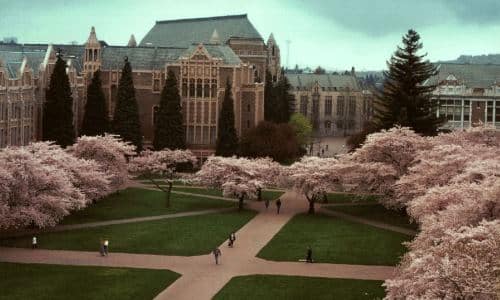
Provided by Harvey Mudd CollegeHarvey Mudd College seeks to educate engineers, scientists and mathematicians well versed in all of these areas and in the humanities and social sciences so that they may assume leadership in their fields with a clear understanding of the impact of their work on society.
Harvey Mudd College
From Wikipedia, The Free EncyclopediaHarvey Mudd College is a highly selective private college of science, engineering, and mathematics, located in Claremont, California. It is one of the institutions of the contiguous Claremont Colleges.
Harvey Mudd shares university resources (libraries, dining halls, etc.) with the other institutions in the Claremont Colleges, including Pitzer College, Scripps College, Claremont McKenna College, and Pomona College. Students at Harvey Mudd are encouraged to take classes, especially classes outside their major of study, at the other four Claremont colleges. Together the Claremont Colleges provide the resources and opportunities of a large university while enabling the specialization and personal attention afforded by the individual colleges.
The college is named after Harvey Seeley Mudd, one of the initial investors in the Cyprus Mines Corporation. Although involved in the planning of the new institution, Mudd passed away before it opened. Harvey Mudd College was funded by Mudd's friends and family, and named in his honor.
Academics
Harvey Mudd College's mission is to educate scientists, engineers, and mathematicians to be well-versed in the social sciences and humanities so that they better understand the impact of their work on society. The college offers four-year degrees in chemistry, mathematics, physics, computer science, biology, and engineering, as well as interdisciplinary degrees in mathematical biology, and a joint major in either computer science and mathematics, or biology and chemistry. Students may also elect to complete an Independent Program of Study (IPS) made up of courses of their own choosing. Usually between two and five students graduate with an IPS degree each year. Finally, one may choose an off-campus major offered by any of the other Claremont Colleges, provided one also completes a minor in one of the technical fields that Harvey Mudd offers as a major.
Because of its mission statement, Harvey Mudd places an unusually strong emphasis on general science education, requiring a full one-third of courses, known as the "common core," outside of one's major. Students are also required to take another one-third of their courses in the humanities, in keeping with the school's tradition of "science with a conscience." The final one-third of courses comprises those in the student's major. The integration of research and education is an important component of the educational experience at Harvey Mudd; upon graduation, every student has experienced some kind of research, usually in the form of a senior thesis or a Clinic Program. The undergraduate focus of HMC means that, unlike many larger science and engineering institutions, undergraduates at HMC get unique access to research positions over the summer and during the school year.
Quick Facts
- Location:
- Southwest
- Setting:
- Large Town Setting
- Type:
- Private
- Size:
- Small (Under 2,000 Undergrad)
- Mascots:
- Stags (men), Athenas (women)
Students & Campus Life
- Undergraduate Enrollment:
- 711
- On Campus Housing:
- Available
- Full Time Students:
- 100%
- Athletic Programs:
- Available
Degree Programs at Harvey Mudd College
Bachelor's Level Programs
-
Arts & Humanities
-
English Language and Literature
See more schools with programs in
English Language and Literature
-
English Language and Literature
A general program that focuses on the English language, including its history, structure and related communications skills; and the literature and culture of English-speaking peoples.See more schools with programs in English Language and Literature
-
English Language and Literature
-
History
See more schools with programs in
History
-
History
A program that focuses on the general study and interpretation of the past, including the gathering, recording, synthesizing and criticizing of evidence and theories about past events. Includes instruction in historiography; historical research methods; studies of specific periods, issues and cultures; and applications to areas such as historic preservation, public policy, and records administration.See more schools with programs in History
-
History
-
Music
See more schools with programs in
Music
-
General Music
A general program that focuses on the introductory study and appreciation of music and the performing arts. Includes instruction in music, dance, and other performing arts media.See more schools with programs in General Music
-
General Music
-
Performing Arts
See more schools with programs in
Performing Arts
-
General Dance
A general program that prepares individuals to express ideas, feelings, and/or inner visions through the performance of one or more of the dance disciplines, including but not limited to ballet, modern, jazz, ethnic, and folk dance, and that focuses on the study and analysis of dance as a cultural phenomenon. Includes instruction in technique, choreography, Laban notation, dance history and criticism, and dance production.See more schools with programs in General Dance
-
General Dance
-
Philosophy
See more schools with programs in
Philosophy
-
General Philosophy
A program that focuses on ideas and their logical structure, including arguments and investigations about abstract and real phenomena. Includes instruction in logic, ethics, aesthetics, epistemology, metaphysics, symbolism, and history of philosophy, and applications to the theoretical foundations and methods of other disciplines.See more schools with programs in General Philosophy
-
General Philosophy
-
Visual Arts
See more schools with programs in
Visual Arts
-
Film/Video and Photographic Arts
See more schools with programs in Film/Video and Photographic Arts
-
Fine/Studio Arts
A program that prepares individuals to generally function as creative artists in the visual and plastic media. Includes instruction in the traditional fine arts media (drawing, painting, sculpture, printmaking, CAD/CAM) and/or modern media (ceramics, textiles, intermedia, photography, digital images); theory of art; color theory; composition and perspective; anatomy; the techniques and procedures for maintaining equipment and managing a studio; and art portfolio marketing.See more schools with programs in Fine/Studio Arts
-
Film/Video and Photographic Arts
-
English Language and Literature
See more schools with programs in
English Language and Literature
-
Engineering
-
General Engineering
A program that generally prepares individuals to apply mathematical and scientific principles to solve a wide variety of practical problems in industry, social organization, public works, and commerce.See more schools with programs in General Engineering
-
General Engineering
-
Interdisciplinary Studies
-
Mathematics and Computer Science
A program with a general synthesis of mathematics and computer science or a specialization which draws from mathematics and computer science.See more schools with programs in Mathematics and Computer Science
-
Multi-/Interdisciplinary Studies
Any instructional program that is derived from two or more distinct programs to provide a cross-cutting focus on a subject concentration that is not subsumed under a single discipline or occupational field.See more schools with programs in Multi-/Interdisciplinary Studies
-
Mathematics and Computer Science
-
Life Science
-
Biology
See more schools with programs in
Biology
-
Biology/Biological Sciences
Students in this program study general biology at an introductory level. This major provides students with a broad overview of biology and includes instruction in general biology and programs covering a variety of biological specializations.See more schools with programs in Biology/Biological Sciences
-
Biomathematics and Bioinformatics
This program focuses on the forefront of computer engineering as it seeks to apply computer-based technologies to biological, biomedical, and biotechnology research. Students of Bioinformatics must study algorithms, network architecture, principles of software design, human interface design, usability studies, search strategies, database management and data mining, digital image processing, computer graphics and animation, CAD, computer programming, and applications to experimental design and analysis and to specific quantitative, modeling, and analytical studies in the various biological specializations.See more schools with programs in Biomathematics and Bioinformatics
-
Biology/Biological Sciences
-
Biology
See more schools with programs in
Biology
-
Mathematics and Statistics
-
General Mathematics
A general program that focuses on the analysis of quantities, magnitudes, forms, and their relationships, using symbolic logic and language. Includes instruction in algebra, calculus, functional analysis, geometry, number theory, logic, topology and other mathematical specializations.See more schools with programs in General Mathematics
-
General Mathematics
-
Natural Sciences
-
Chemistry
See more schools with programs in
Chemistry
-
General Chemistry
A general program that focuses on the scientific study of the composition and behavior of matter, including its micro- and macro-structure, the processes of chemical change, and the theoretical description and laboratory simulation of these phenomena.See more schools with programs in General Chemistry
-
General Chemistry
-
Physics
See more schools with programs in
Physics
-
General Physics
A general program that focuses on the scientific study of matter and energy, and the formulation and testing of the laws governing the behavior of the matter-energy continuum. Includes instruction in classical and modern physics, electricity and magnetism, thermodynamics, mechanics, wave properties, nuclear processes, relativity and quantum theory, quantitative methods, and laboratory methods.See more schools with programs in General Physics
-
General Physics
-
Chemistry
See more schools with programs in
Chemistry
-
Social Sciences
-
Anthropology
See more schools with programs in
Anthropology
-
General Anthropology
A program that focuses on the systematic study of human beings, their antecedents and related primates, and their cultural behavior and institutions, in comparative perspective. Includes instruction in biological/physical anthropology, primatology, human paleontology and prehistoric archeology, hominid evolution, anthropological linguistics, ethnography, ethnology, ethnohistory, socio-cultural anthropology, psychological anthropology, research methods, and applications to areas such as medicine, forensic pathology, museum studies, and international affairs.See more schools with programs in General Anthropology
-
General Anthropology
-
Economics
See more schools with programs in
Economics
-
Econometrics and Quantitative Economics
A program that focuses on the systematic study of mathematical and statistical analysis of economic phenomena and problems. Includes instruction in economic statistics, optimization theory, cost/benefit analysis, price theory, economic modeling, and economic forecasting and evaluation.See more schools with programs in Econometrics and Quantitative Economics
-
General Economics
A general program that focuses on the systematic study of the production, conservation and allocation of resources in conditions of scarcity, together with the organizational frameworks related to these processes. Includes instruction in economic theory, micro- and macroeconomics, comparative economic systems, money and banking systems, international economics, quantitative analytical methods, and applications to specific industries and public policy issues.See more schools with programs in General Economics
-
Econometrics and Quantitative Economics
-
International Relations and Affairs
See more schools with programs in
International Relations and Affairs
-
International Relations and Affairs
A program that focuses on the systematic study of international politics and institutions, and the conduct of diplomacy and foreign policy. Includes instruction in international relations theory, foreign policy analysis, national security and strategic studies, international law and organization, the comparative study of specific countries and regions, and the theory and practice of diplomacy.See more schools with programs in International Relations and Affairs
-
International Relations and Affairs
-
Psychology
See more schools with programs in
Psychology
-
General Psychology
A general program that focuses on the scientific study of individual and collective behavior, the physical and environmental bases of behavior, and the analysis and treatment of behavior problems and disorders. Includes instruction in the principles of the various subfields of psychology, research methods, and psychological assessment and testing methods.See more schools with programs in General Psychology
-
General Psychology
-
Anthropology
See more schools with programs in
Anthropology
-
Technology
-
Information Systems Operation and Management
See more schools with programs in
Information Systems Operation and Management
-
General Computer Science
A general program that focuses on computers, computing problems and solutions, and the design of computer systems and user interfaces from a scientific perspective. Includes instruction in the principles of computational science, and computing theory; computer hardware design; computer development and programming; and applications to a variety of end-use situations.See more schools with programs in General Computer Science
-
General Computer Science
-
Information Systems Operation and Management
See more schools with programs in
Information Systems Operation and Management
Students
General
|
Full-Time vs. Part-Time
|
Men vs. Women
|
||||
|
Race/Ethnicity
|
Geography
|
In State vs. Out-of-State
|
Top States for Incoming Freshman
|
| Percent of Students International: | 3% |
Housing
| On-Campus Housing Available: | Yes |
| Percent of Students Living On-Campus: | 96% |
| Freshman Students Required to Live on Campus: | No |
Athletics
| Member of: | NAA, NCAA |
| Sports Include: |
Football (Southern California Intercoll Ath Conf) Basketball (Southern California Intercoll Ath Conf) Baseball (Southern California Intercoll Ath Conf) Track (Southern California Intercoll Ath Conf) |
| Tuition & Fees (undergraduate) | Expenses | ||
Published Tuition and Fees: |
$ 31,738 | ||
Average Tuition for Full-Time Undergrads: |
$ 31,536 | ||
Required Fees for Full-Time Undergrads: |
$ 202 | ||
| Financial Aid | Avg. Amount Received | % of Students Receiving Aid | |
Federal Grants: |
$ 4,691 | 12% | |
State and Local Grants: |
$ 5,890 | 18% | |
Institutional Grants: |
$ 12,937 | 65% | |
Student Loans: |
$ 3,727 | 47% | |
Any Aid: |
84% |
Selectivity (Undergraduate Only)
| Acceptance Rate: | 36% (Highly Selective) |
| Test Scores | |
| SAT Scores: | |
| % of Students Submitting SAT Scores: | 100% |
| Bottom 25th Percentile: | Verbal: 670, Math: 710 |
| Top 75th Percentile: | Verbal: 760, Math: 800 |
Application Requirements (Undergraduate Only)
| Application Fee: | $ 50.00 |
| Formal Demonstration of Competencies: | Not Required |
| High School Diploma or Equivalent: | Required |
| High School GPA: | Recommended |
| High School Rank: | Recommended |
| High School Record: | Required |
| Recommendations: | Required |
| TOEFL: | Recommended |
| Test Scores: | Required |
College Advice |
Question: Harvey Mudd or Rose-Hulman?Hi, I recently got accepted to Harvey Mudd College and the Rose-Hulman Institute of Technology. I'm in the process of deciding between which one to attend. SAT scores wise, Mudd kills Rose and yet they're still considered to be #1 for Bachelors in Engineering according to the US News and World Report. Which one offers the best research opportunities, is the better college, has a better social life, etc, and which one will give me a better chance at grad schools like Cornell, Princeton, MIT, or CalTech?34 months ago
Best AnswerThere may not be too much functional difference. However, I'd still go with Mudd. The emphasis on humanities education will serve you in very good stead, trust me--as an information architect, I can tell you that cultural context is where tech is going. Systems do not operate outside of people, and efficient systems are tools designed for (and by!) actual users. California is much more with-it than Indiana. You'll be exposed to the Claremont-McKenna consortium, and be close to America's most important locus of tech development and knowledge. You'll probably have an edge for grad school too. MIT and CalTech faculty will probably know your Mudd professors personally. They might know your Rose faculty too, of course, but only if you go into engineering. The same is true for Cornell, Princeton, and the like. Finally, the recent presidential ouster at Rose is a potential warning sign...not a deal-breaker, but be advised. All things considered, I'd definitely go to Mudd. |
Question: What college should I go to?I can choose from Harvey Mudd College or Carnegie Mellon University. I got waitlisted at Dartmouth. I can pursue Dartmouth, but if they accept me, I have no choice. I would have to go. So, Choice 1: Go for Dartmouth. Get in and go. Or, don't get in and revert to option 2 or 3. Choice 2: Harvey Mudd C. Choice 3: Carnegie Mellon U. Keep in mind I live in SF, so the distance from home counts for something. Ahhhh! I totally forgot to mention. I am going to study Engineering, but I'd like to be able to take goo courses in the Humanities.34 months ago
Best AnswerMy understanding is that Harvey Mudd is a fabulous little school surrounded by several other fabulous schools--Pomona, Scripps, Claremont-Mckenna, Pitzer. If it was my choice, I'd choose Harvey Mudd. It's science-specific, but has all the resources of the other colleges to draw from. And the weather is much better than CM or Dartmouth. But you have to do what is best for you. It sounds like you don't want to go far away. . . Harvey Mudd is not exactly close to SF, so it's sort of like leaving the state. |
Question: is harvey mudd college a great school?36 months ago
Best AnswerYES! It is a very competitive engineering and science-oriented school. It's also part of the Claremont Consortium that includes Claremont-McKenna, Pitzer, Pomona, and Scripps. . . if you go to one, you get to use the resources, such as libraries, at the others. |
Question: Is Harvey Mudd College a good school, compared with UC Berkeley and Cornell?46 months ago
Best AnswerHarvey Mudd College should not really be compared to those other two as it is quite significantly a differnt institution. For one thing the school is very small, and really geared to science. Cornell is a closer fit to Mudd than UCB, but it is still a whole differnt beast. Mudd tends to attact and hold onto the same type of students who are looking at the high-power small colleges out there. On a side note Mudd also is one of only three instututions left in the US that has had no grade inflation since the 1950's, and grad schools know it. |