
Paramedic and Emergency Medical Technician (EMT) Career Overview
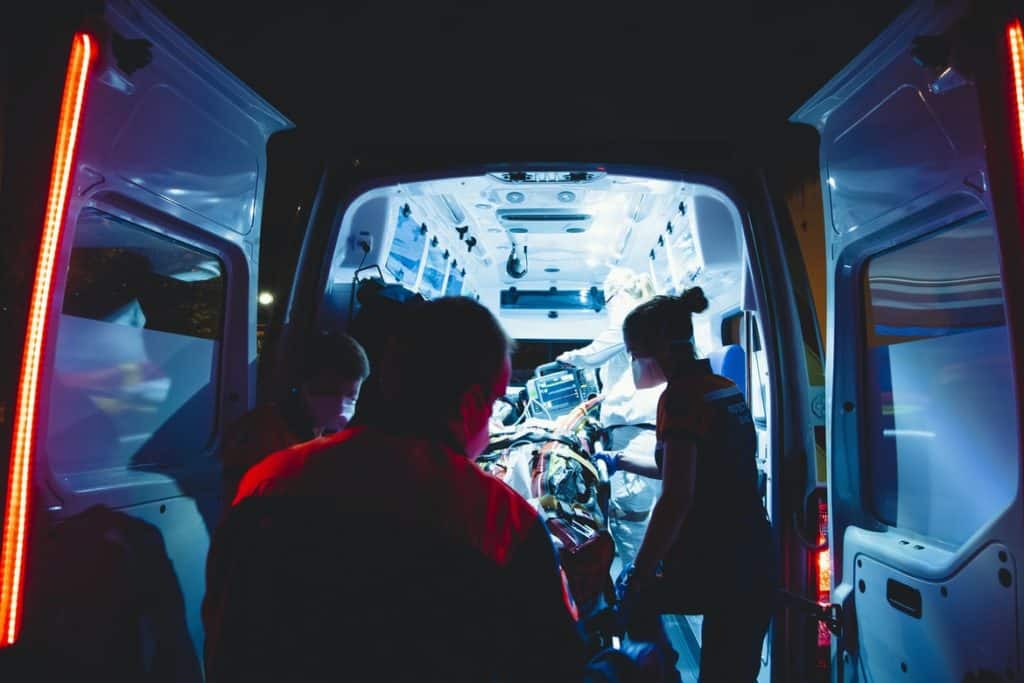
Emergency medical technicians (EMTs) and paramedics are often responsible for people’s lives. Situations that require immediate medical attention such as slips and falls, childbirth, heart attacks, accidents, and gunshot wounds require the presence of an EMT or paramedic. They care for and transport the injured or sick to a medical facility.
If you’re considering becoming a paramedic or emergency medical technician, it’s important to compare the career options of each. Discover how the EMT career path and paramedic career path compare with this guide.
EMT vs. Paramedic
There are five levels for emergency medical technicians, as delineated by the National Registry of Emergency Medical Technicians (NREMT): First Responder, EMT-Basic, EMT-Intermediate, and Paramedic. However, some states have their own certification programs with different names and titles. Review the EMT and paramedic requirements and job descriptions to learn more about these levels of emergency technicians.
What Is an Emergency Medical Technician?
The EMT-Basic is the first to respond to a medical situation. They are prepared to care for patients at the scene of an accident and also while they are being transported to the hospital in an ambulance under the supervision of someone more highly trained. The EMT-Basic assesses the patient’s condition and handles cardiac, respiratory, and trauma emergencies.
Specific tasks for an EMT-Intermediate vary by state, however, they have more advanced training than an EMT-Basic.
EMTs usually work more than 40 hours per week and have irregular hours because emergency services operate 24 hours a day. They work indoors, outdoors, and in all types of weather and must do a significant amount of bending, kneeling, and heavy lifting. They might be exposed to communicable diseases, such as AIDs and hepatitis-B, or contract other illnesses or injuries from patients.
Emergency Medical Technician Job Description
The EMT career path requires attention to detail and the skills necessary to assess patients’ conditions. The emergency medical technician job description can vary depending on the position, but most respond to 911 calls, determine basic treatment options in first-aid situations, and accompany patients in ambulances to take them to the nearest hospital or suitable healthcare facility.
What Is a Paramedic?
A paramedic or emergency medical technician is allowed to provide more intense pre-hospital care, such as administering intravenous or oral medications, performing endotracheal intubations, and interpreting electrocardiograms (EKGs). Paramedic requirements and their specific job duties vary from state to state.
Paramedics experience a larger-than-average number of work-related injuries or illnesses, and the work is often physically and emotionally strenuous as they are often working in life or death situations. However, many people find this career challenging, exciting and rewarding.
Paramedic Job Description
Paramedics work in many of the same situations as EMTs. The paramedic requirements include additional training in specialized equipment and practices, so these professionals can handle additional emergency situations and first-aid responses.
How Are EMTs and Paramedics Similar?
Both EMTs and paramedics share many similarities in their professional roles. Emergency medical technicians and paramedics should expect a fast as average employment growth, though opportunities should be best for those who have earned advanced certifications. Formal training and certification or licensure are normally required for emergency medical technicians and paramedics, however, each state has its own requirements.
Emergency medical technicians and paramedics can work irregular hours, as emergency services function 24 hours a day. Emergency medical technicians and paramedics are assigned locations by a 911 operator and often work with firefighters and police. While assessing the cause of the patient’s condition, they determine whether the patient has any pre-existing medical conditions. Under the supervision of a physician, they operate emergency medical service systems. Emergency medical technicians and paramedics must follow certain protocols and guidelines during emergency care and when transferring patients to the hospital.
EMT vs. Paramedic Salary
The U.S. Bureau of Labor Statistics (BLS) doesn’t separate EMT and paramedic salary information. According to BLS, the 2020 median pay for paramedic and emergency medical technician positions was $36,650. The lowest 10% of workers earned less than $24,650, while the salary for the highest 10% was over $62,150.
Paramedic Salary
While BLS salaries aren’t separated by EMT vs. paramedic, PayScale estimates that the median yearly paramedic salary is approximately $50,800, as of January 2022. This higher salary average is due in part to the advanced training and experience of most paramedics.
Emergency Medical Technician Salary
How much do emergency medical technicians make? EMTs earned a median salary of approximately $40,700, according to PayScale in January 2022. The median emergency medical technician salary is lower than that of a paramedic in part due to the differences in training requirements.
How to Become a Paramedic
Paramedics are the most advanced level of emergency workers. Follow these steps to learn how to become a paramedic:
- Earn a high school diploma
- Complete cardiopulmonary resuscitation (CPR) certification
- Earn EMT certification (only required in some states and positions)
- Complete paramedic schooling; typically one to two years in a nondegree award program or associate’s degree program
- Pass the national exam to become licensed by the National Registry of Emergency Medical Technicians
How long does it take to become a paramedic? It typically takes between 1,200 and 1,800 hours to train to become a paramedic, though some states have different requirements.
Paramedic Requirements
Paramedics receive training in physiology and anatomy as well as advanced medical skills. Usually, certification by the NREMT is required, though some states offer their own certification examination or allow students to choose which test they take. Generally, paramedics are required to renew their license every two to three years after paramedic schooling. Most states ban those with questionable criminal histories from obtaining licensure.
Paramedics should have excellent dexterity, physical coordination, and agility. They must be emotionally stable as they often deal with stressful situations. Most employers mandate a criminal background check.
How to Become an EMT
When comparing EMT vs. paramedic career roles, it’s important to note that there aren’t as many emergency medical technician education requirements. Many professionals start as EMTs before becoming paramedics. Here are the basic steps:
- Receive a high school diploma
- Become CPR certified
- Apply to accredited emergency medical technician schools
- Complete the required hours of instruction and license exam
The entry requirements for emergency medical technician schools vary. Look for an accredited program that covers your state-required topics and hours of instruction to ensure you’re ready to take the necessary exam.
EMT Requirements
Generally, emergency medical technician education requirements include a high school diploma and CPR certification. Coursework at the EMT-Basic level teaches emergency skills such as managing trauma, respiratory and cardiac emergencies as well as patient assessment.
Students also spend time in an emergency department or ambulance. EMT-Basic level students practice dealing with fractures, airway obstruction, bleeding, emergency childbirth, and cardiac arrest. They learn how to operate common emergency equipment.
Approved EMT-Basic training graduates are required to successfully complete a practical and written examination administered by the NREMT or the State. Usually, the EMT-Intermediate levels require 30 to 350 hours of training depending on the scope of practice.
Paramedic and EMT Job Market
The combined paramedic and EMT job growth is estimated to be an 11% increase from 2020 to 2030, according to BLS. This is faster than the national average. This projection includes both paramedic and emergency medical technician positions.
Paramedics Job Outlook
Not only is the paramedic’s job outlook expected to grow faster than the average, but there are also career advancement opportunities for licensed professionals. Paramedics may advance to become operations managers, supervisors, or administrative directors. Some become dispatchers, physician assistants, or instructors, while others move into marketing or sales of emergency medical equipment.
EMT Job Outlook
Now that you know how much emergency medical technicians make, it’s important to review the job growth of this career. EMT job growth is also expected to be greater than the average job growth. As a licensed EMT, you can choose to train to become a paramedic or move into administrative, dispatch, or instruction positions with the relevant experience and training.
Sources:
https://www.bls.gov/ooh/healthcare/emts-and-paramedics.htm#tab-1
https://www.payscale.com/research/US/Job=Paramedic/Hourly_Rate
https://www.payscale.com/research/US/Job=Emergency_Medical_Technician_(EMT)_%2F_Paramedic/Hourly_Rate